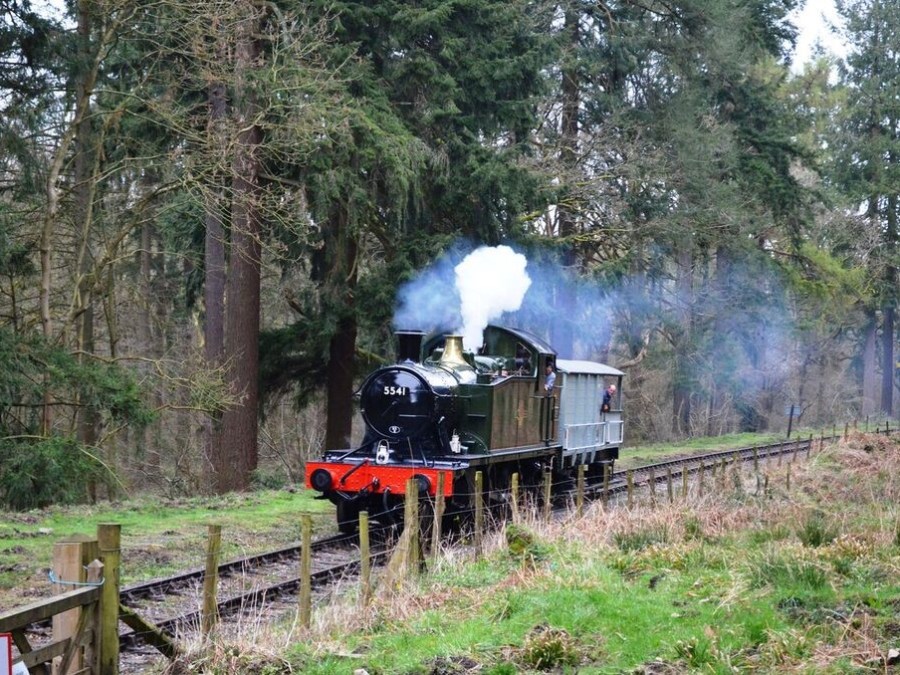
We are open for business to photography, film, and TV (both factual and drama) and have a track record in all these media.
Our tariffs reflect the variety of demands that these different scales of operation require. Student photographer or film-maker? Big-budget studio feature film? You are all welcome and we have the facilities to accommodate all your needs.
Don’t forget that if we don’t have the locos or carriages which you want, here on our railway, they can still be brought, either via our connection with the mainline railway or on a road low-loader.
-
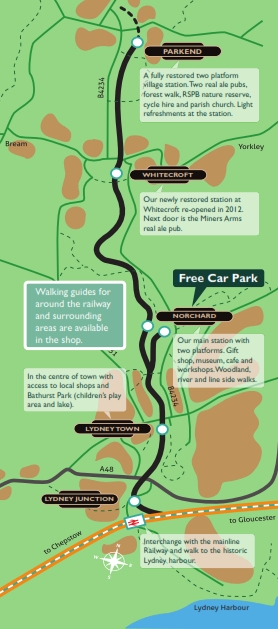
Our single track railway extends 4½ miles from Lydney Junction (near the connection with Network Rail’s main line) northwards into the Forest, terminating presently at Parkend.
-
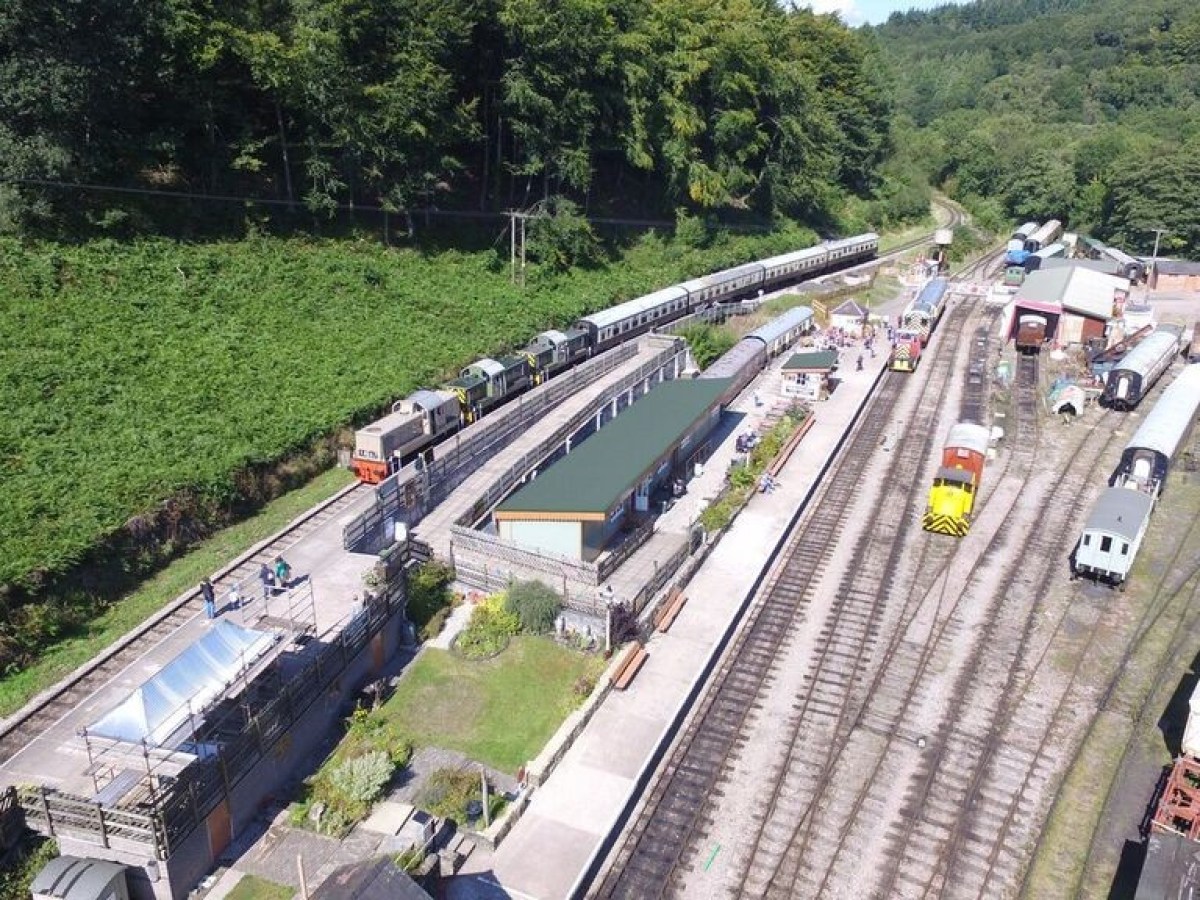
Lydney Junction has an island platform with tracks either side; Lydney Town is single-platformed; Norchard, with the railway HQ and dedicated parking area, has a high-level through platform and a low-level terminus platform; Whitecroft has one platform with a planned second platform and Parkend has two facing platforms. All, except Norchard, have level crossings situated close by.
-
Both Lydney Junction and Norchard have sidings, Norchard also having workshops and maintenance pits.
-
The DFR is graced by several steam and diesel locomotives, and a fleet of diesel multiple units – full details shown below for our current roster of locomotives.
-
The DFR runs two 2-car diesel multiple units (DMUs), whilst for loco-haulage we have a rake of Mk1 BR carriages and a GWR inspection saloon. We also have a variety of freight wagons and an unusual self-powered crane. This fact sheet describes the history of the passenger vehicles to help you place them in the correct period context.
-
The Dean Forest Railway on screen includes:
- Am I Being Unreasonable?
- Casualty
- Dodger
- Famous Five
- Father Brown
- Netflix Education
- Sister Boniface Mysteries
- The Stupendium (music video)
- Various advertisements and promotional segments
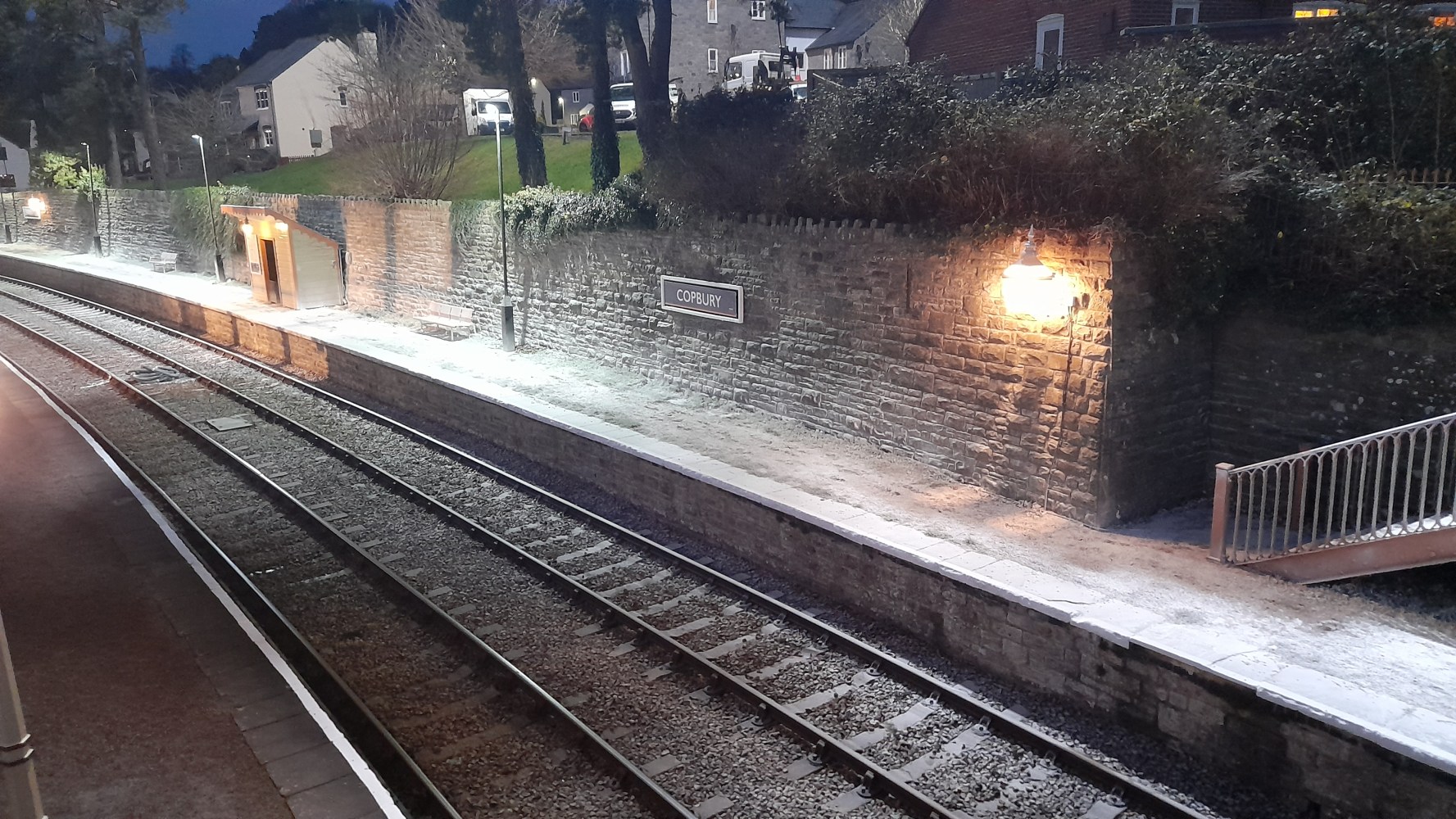 Parkend Station dressed as ‘Copbury’ for ‘Am I Being Unreasonable?’ Photo courtesy of Adam Dickinson
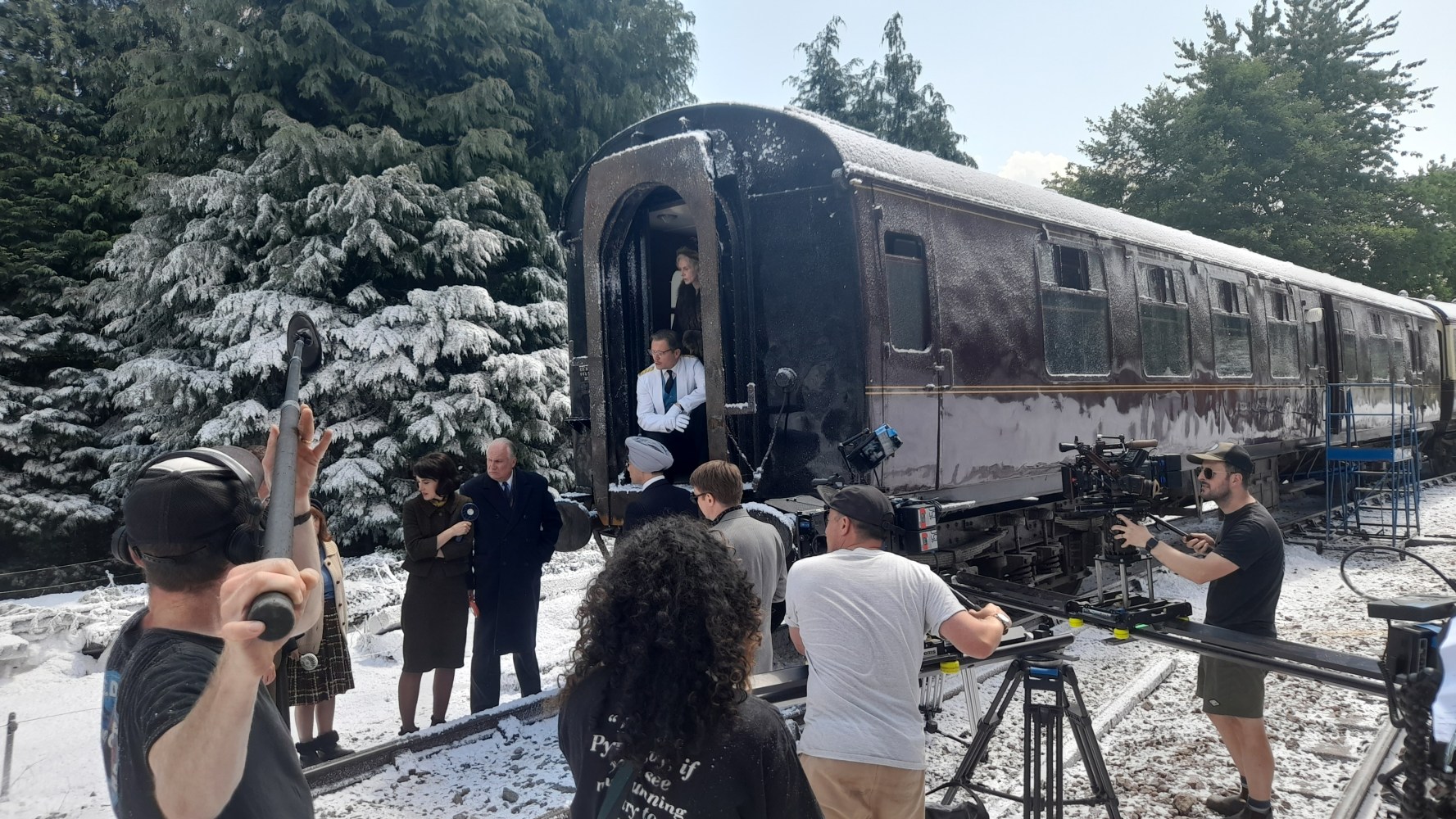 Snow in July! Filming for Sister Boniface. Photo courtesy of Adam Dickinson.
Steam Locomotives
There are currently 3 operational steam locomotives at the Dean Forest Railway (see our Steam Locomotives page for up to date information on any visitors or changes to locomotive availability).
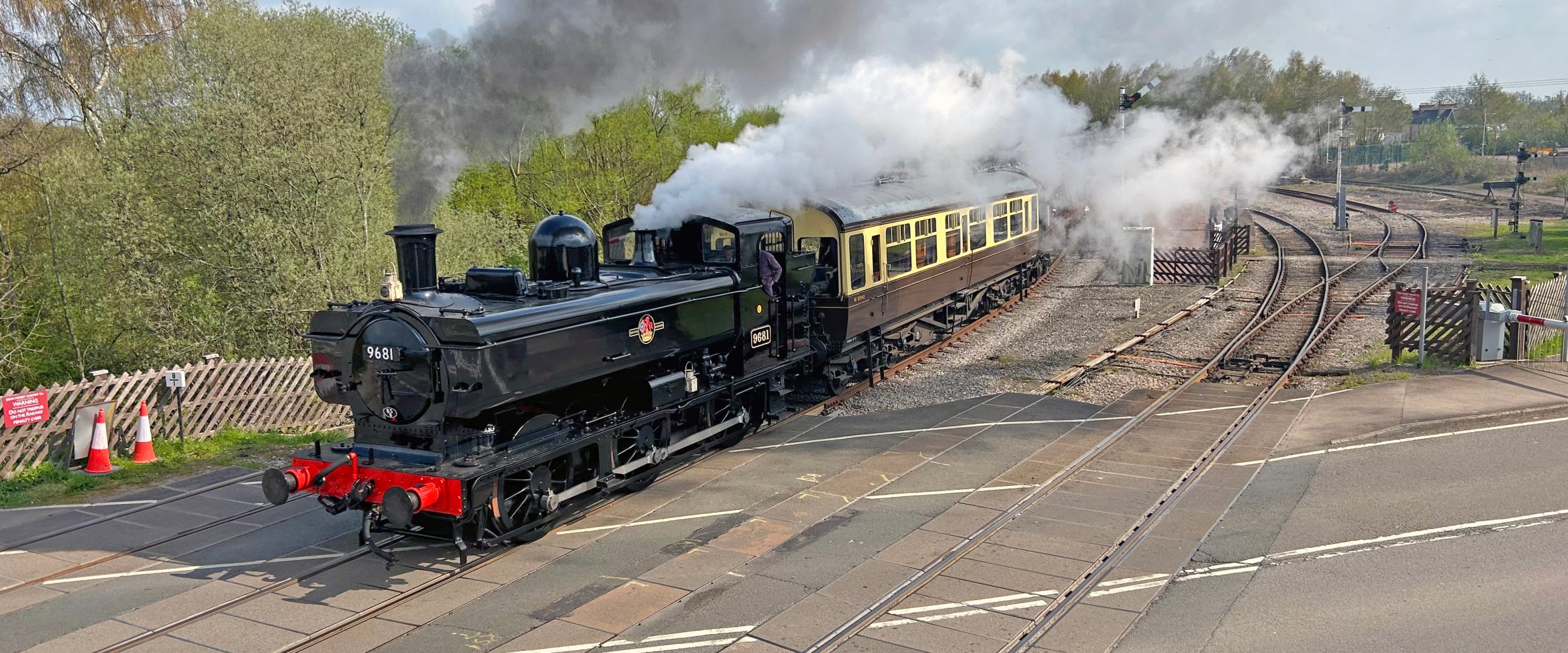
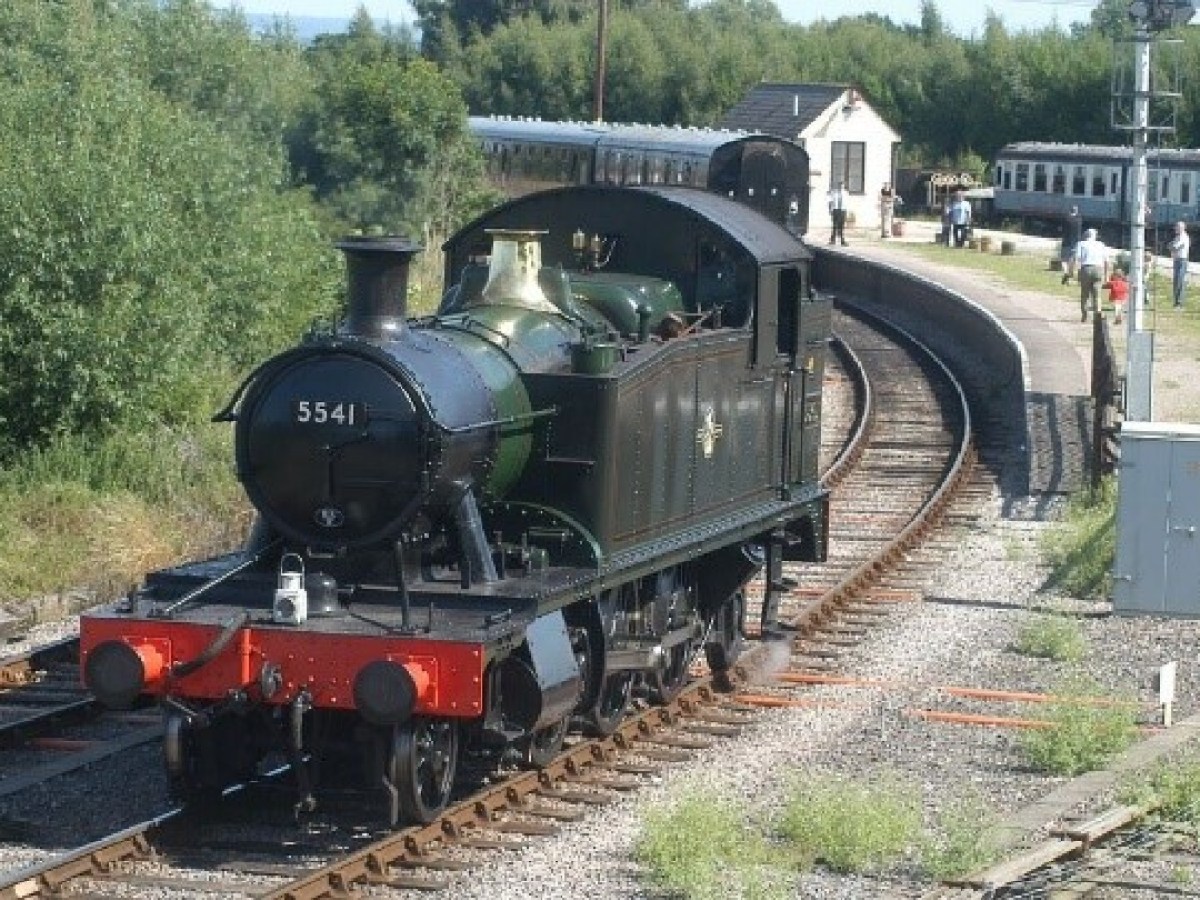
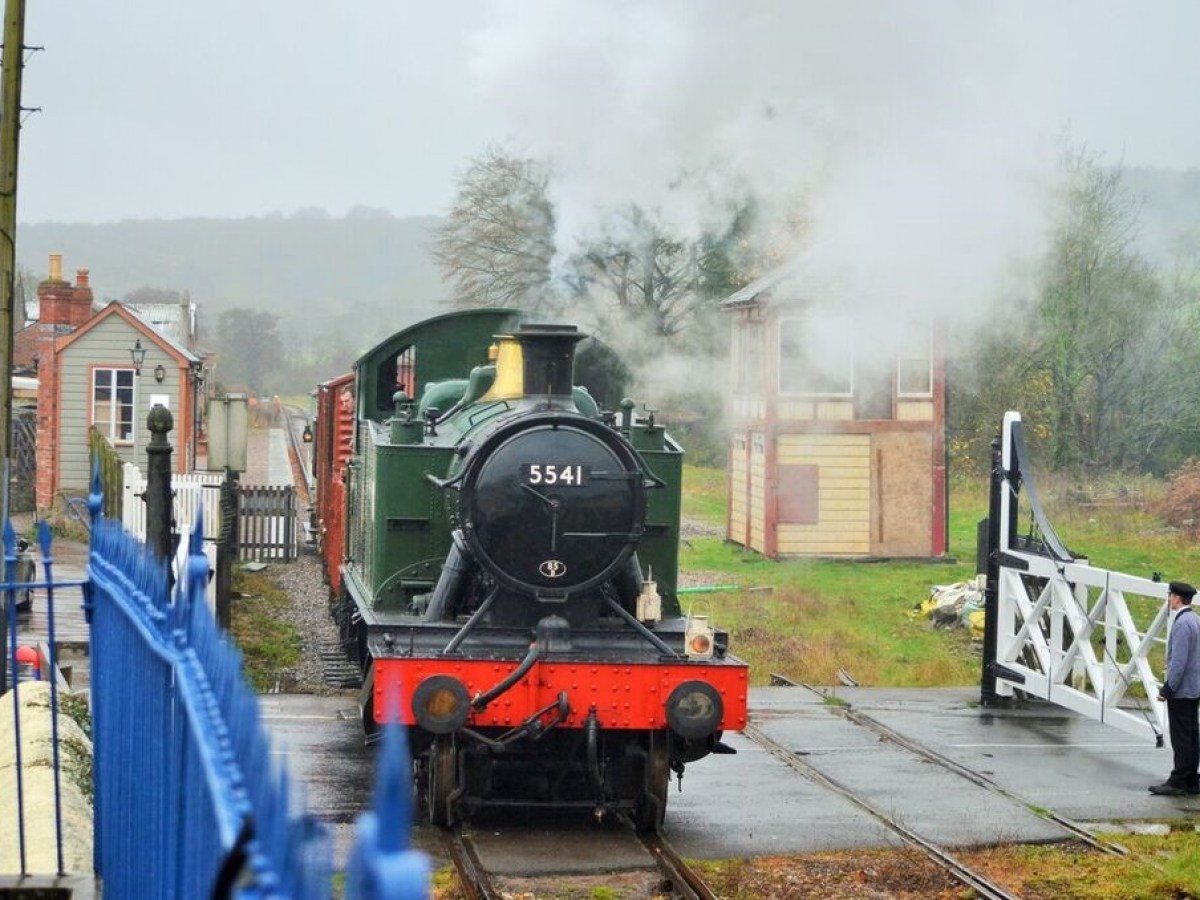
The 8750 Pannier no. 9681, built in 1949, is part of the Great Western Railway’s largest single class of locomotive, the 57xx Pannier tank. Owned by the Dean Forest Locomotive Group, a charity based at the Dean Forest Railway, the ‘Forest Pannier’ regularly runs the passenger trains at the railway.
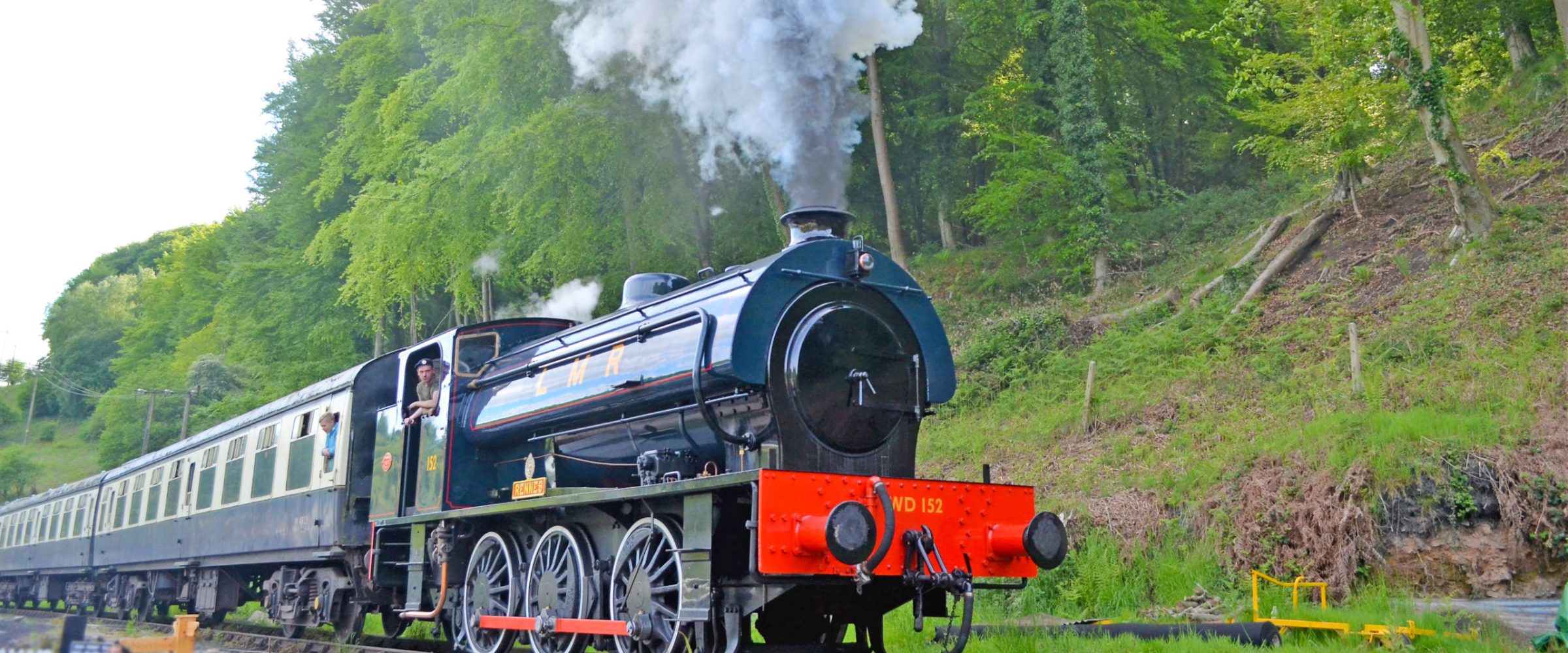
Austerity no. WD152 ‘Rennes’ is one of the large class of Hunslet Austerity designs. Built in 1944 for the war effort, a large number of these easily to build, easy to maintain and reliable locomotives were built during the harsh wartime conditions.
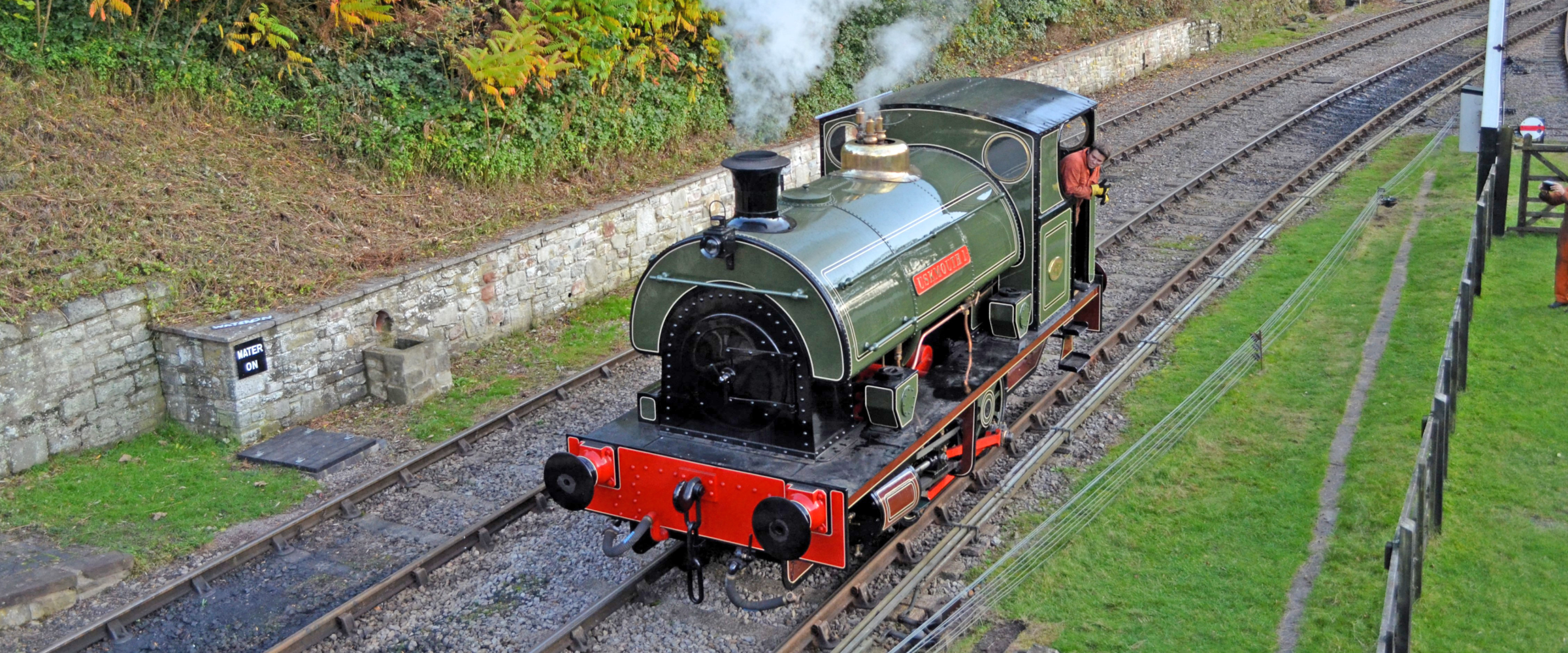
Peckett works no. 2147 ‘Uskmouth No. 1’ is a Peckett R4 steam locomotive, built by Peckett & Sons in 1952. The locomotive was constructed for work at the Uskmouth Power Station in Newport, South Wales. Recently restored, this is the flagship locomotive of the Dean Forest Railway Society.
Diesel Multiple Units (DMUs)
DMUs were introduced by British Railways from 1954 to all regions except the Southern which had been gradually and extensively electrified since 1903. They were brought to secondary routes, suburban services, and branch lines to replace loco-hauled trains. Following the Modernisation Plan of 1955, diesel locomotives also started to replace steam for hauling long-distance expresses, although ironically the last steam locomotive, Evening Star, was built as late as 1960, for ‘express’ freight purposes.
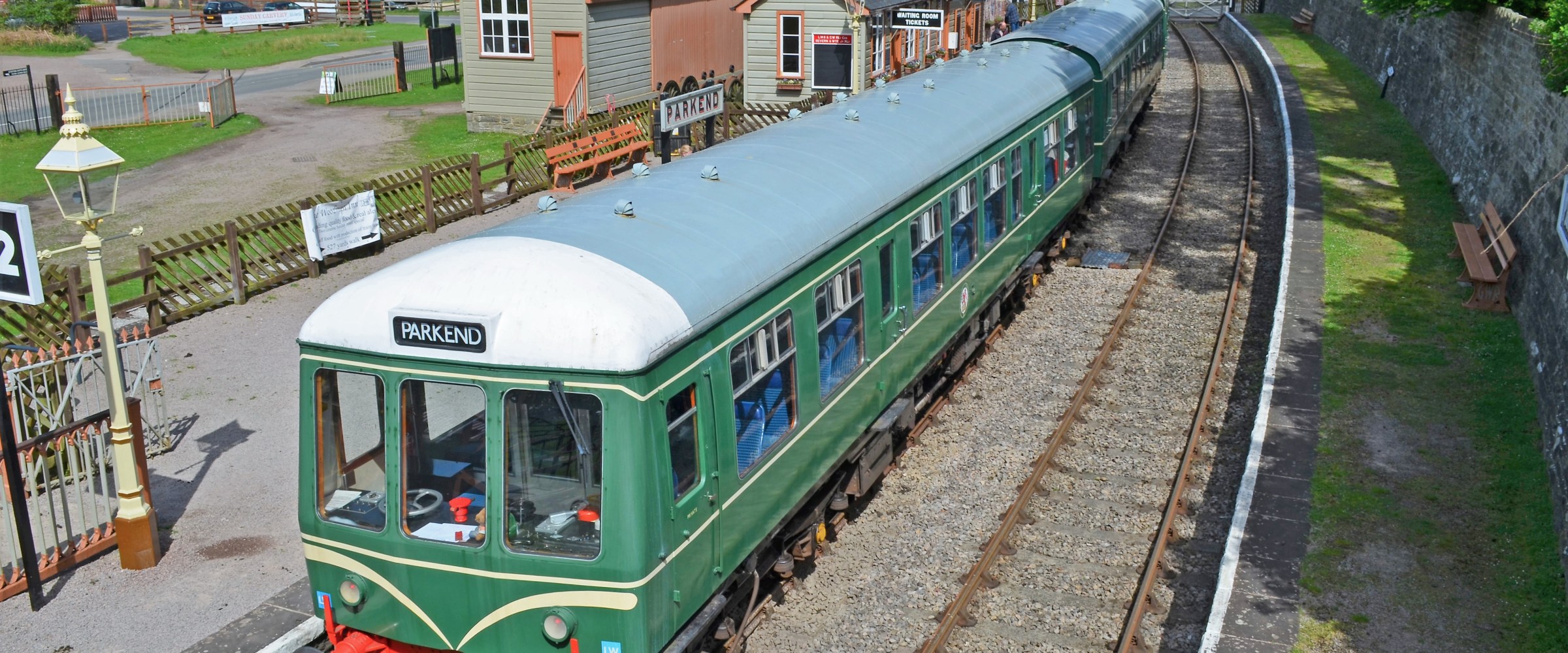
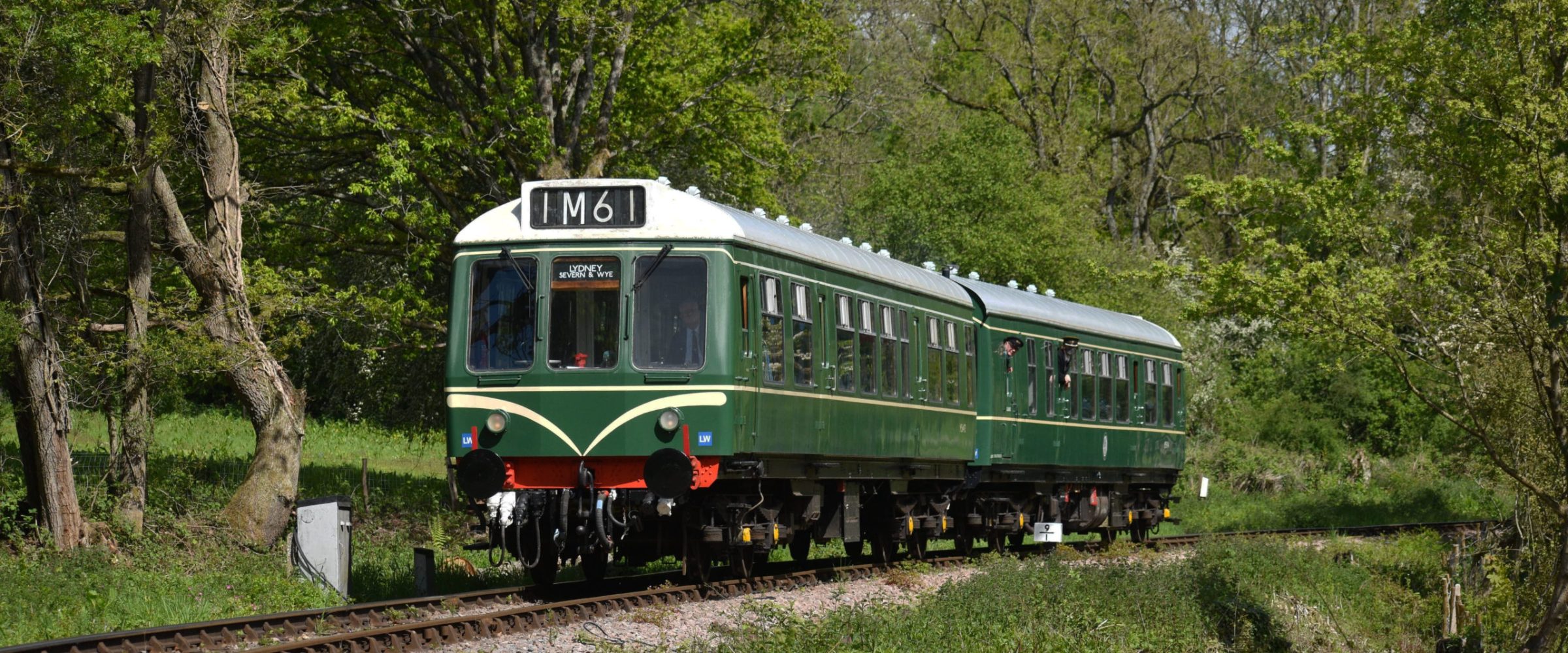
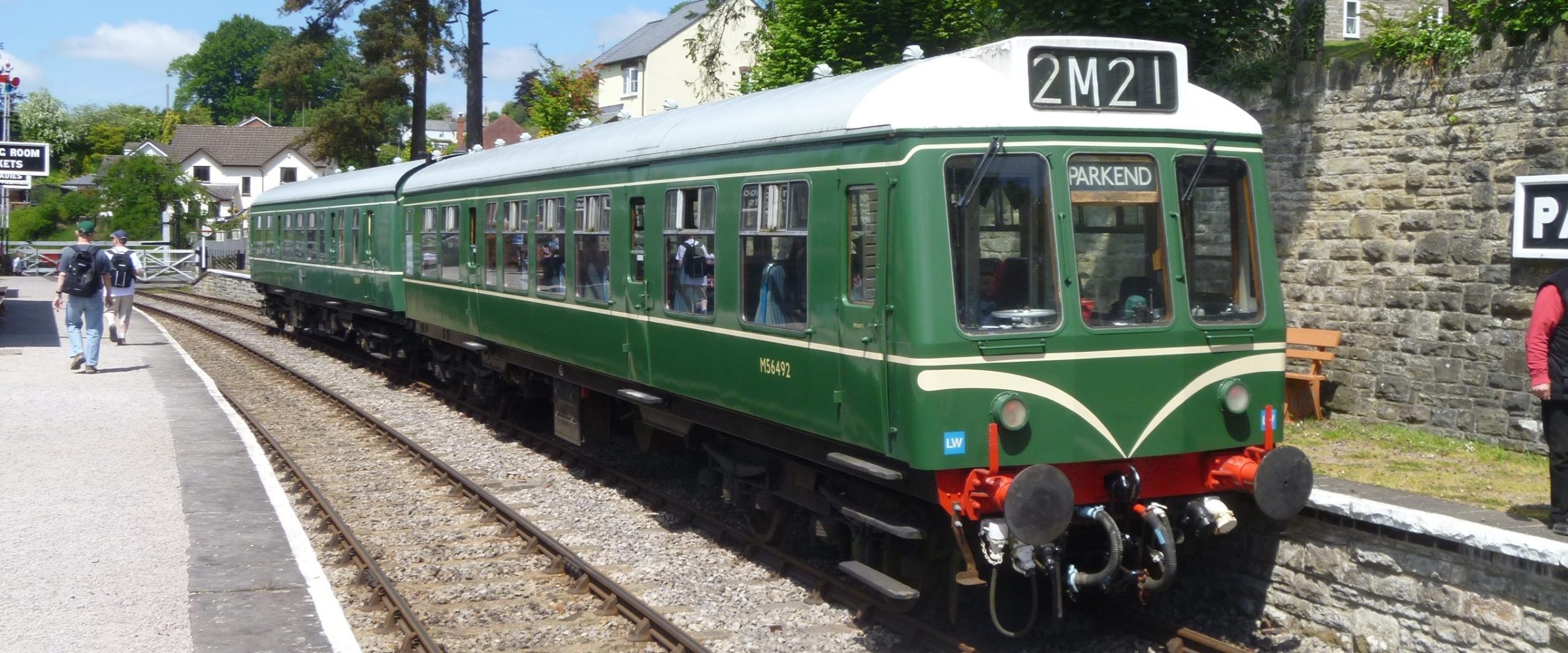
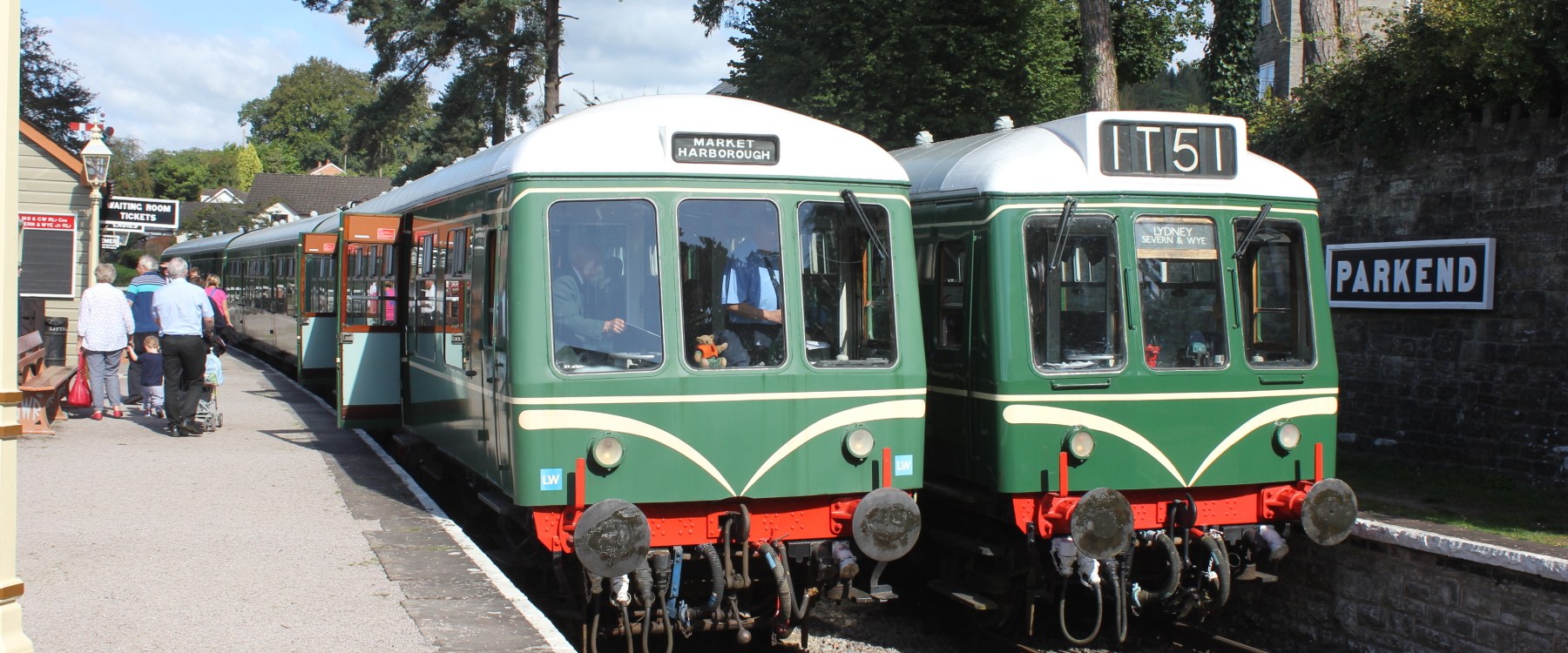
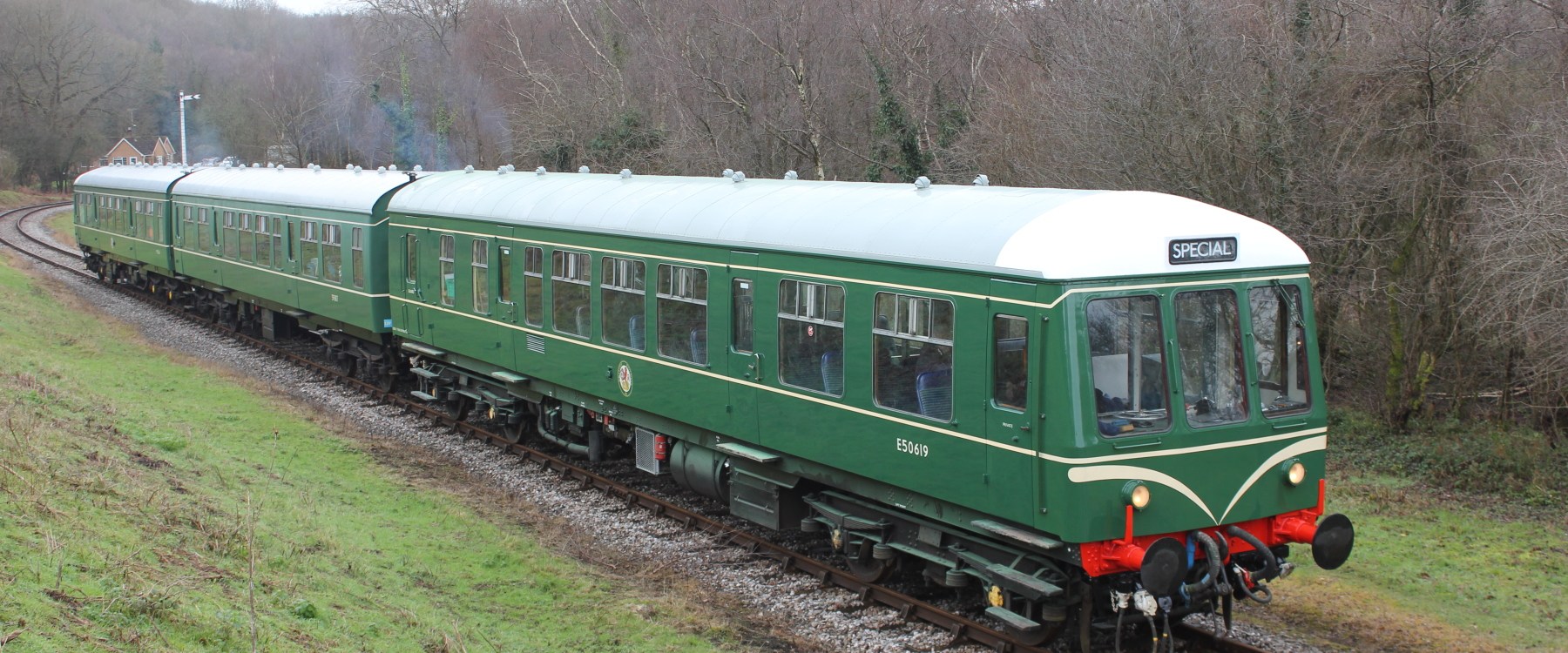
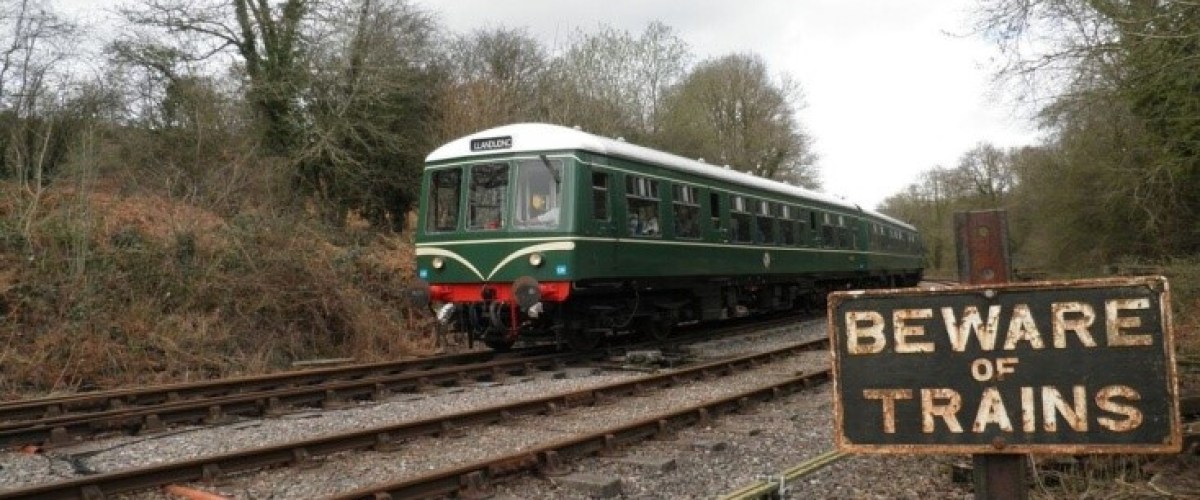
The Class 108 DMUs based with us at the Dean Forest Railway were built in Derby from 1958 to 1961 and withdrawn from mainline service between 1991 and 1993, along with DMUs generally. Their green livery is how DMUs were styled from the outset until the 1960s’ BR corporate identity plan introduced blue and blue/grey as a universal colour scheme, the appellation ‘British Rail’ and the still current double-arrow logo.
The following is from http://preserved.railcar.co.uk/Class108.html
Class 108s have been one of the most successful DMU classes, both in British Railways days and in preservation. They were the “standard” DMU, built by BR itself (at Derby) and were the final design that was piloted by the earlier Derby Lightweight class. Their corrosion-free aluminium bodies have made Class 108s ideally suited to the preservation life of long periods stood still stabled in the open air.
Most Class 108s in preservation were withdrawn in the early 1990s and were the first class of DMU to be preserved in very large numbers. This was partially due to BR’s decision to offer this class as the standard DMU for heritage buyers. Consequently, a large number were saved and they formed the backbone of the heritage scene in the 1990s and the first part of the early 2000s. It was only the withdrawals of the Class 101s and Class 117s in the mid-2000s that rivalled the numbers of 108s on heritage railways.
Many 108s have been running “as withdrawn” as their good condition upon preservation meant most could be launched immediately into traffic. However, 15 years on and the wear is now starting to take its toll, with corrosion around the (steel) cabs developing. Luckily, however, enough railways and groups are now investing heavily in these vehicles to enable them to continue to operate in preservation.
Diesel Locomotives
There are several operational diesel locomotives at the Dean Forest Railway (see our Diesel Locomotives page for up to date information on any visitors or changes to locomotive availability).
The Class 14 0-6-0 diesel-hydraulic locomotives D9555 and D9521 date from 1964 to 1965, 56 being built for short freight trips or shunting. Becoming redundant as early as 1968 to 1970 when their intended purpose expired, they were either scrapped or sold off into industry for use on sites such as coal mines (as with ours), steelworks, quarries, and oil refineries. They make ideal workhorses on heritage railways with their modest but perfectly adequate power and dual-control cabs. Currently only D9521 is at the railway, as D9555 is undergoing major works.
Class 73 no. E6003 (73003) ‘Sir Herbert Walker’ is a ‘JA’ type Class 73/0. Built at Eastleigh works in 1962, these innovative diesels were one of the first bi-mode (meaning that it can be powered it two ways) locomotives ever built. The locomotives were primarily built to operate on Electric power which they’d collect via the Southern Region 3rd Rail collector shoes mounted on their bogies. To operate on un-electrified branches and in yards, they were fitted with an English Electric 4-Cylinder diesel engine. A very successful design, Class 73’s still operate on the mainline railway today. E6003 was named ‘Sir Herbert Walker’ in March 1993, after the Southern Railways former General Manager of 1923-1937.
We also have two diesel-electric shunting locos, Class 08 no. 08769 and Class 09 no. 09106, mostly used for yard duties at Norchard and maintenance trips up the line. The 08 class totaled 996, built between 1952 and 1962, more numerous than any other class of loco with several still in service on the mainline and in industrial sites. Gladys was built in 1960 and withdrawn from active service with BR in 1989. Ten years later it arrived with us, being used over the previous decade for training at the Moreton-in-the-Marsh Fire Training College. The 08s have just over half the power of our Class 14s shown above. The Class 09 was an evolution from the Class 08, which were limited to a top speed of 15mph. The requirement for a faster shunter resulted in the Class 09 which were geared for a slightly higher top speed (27.5mph) traded off against a lower tractive effort. 09106 was built as D3927 in 1961 and became 08759 when TOPS numbering was introduced. It received the 09/1 conversion work in 1993, becoming the Class 09 locomotive we know today. Most recently the locomotive earned a regular keep at Cardiff Tidal Sidings, shunting steel trains!
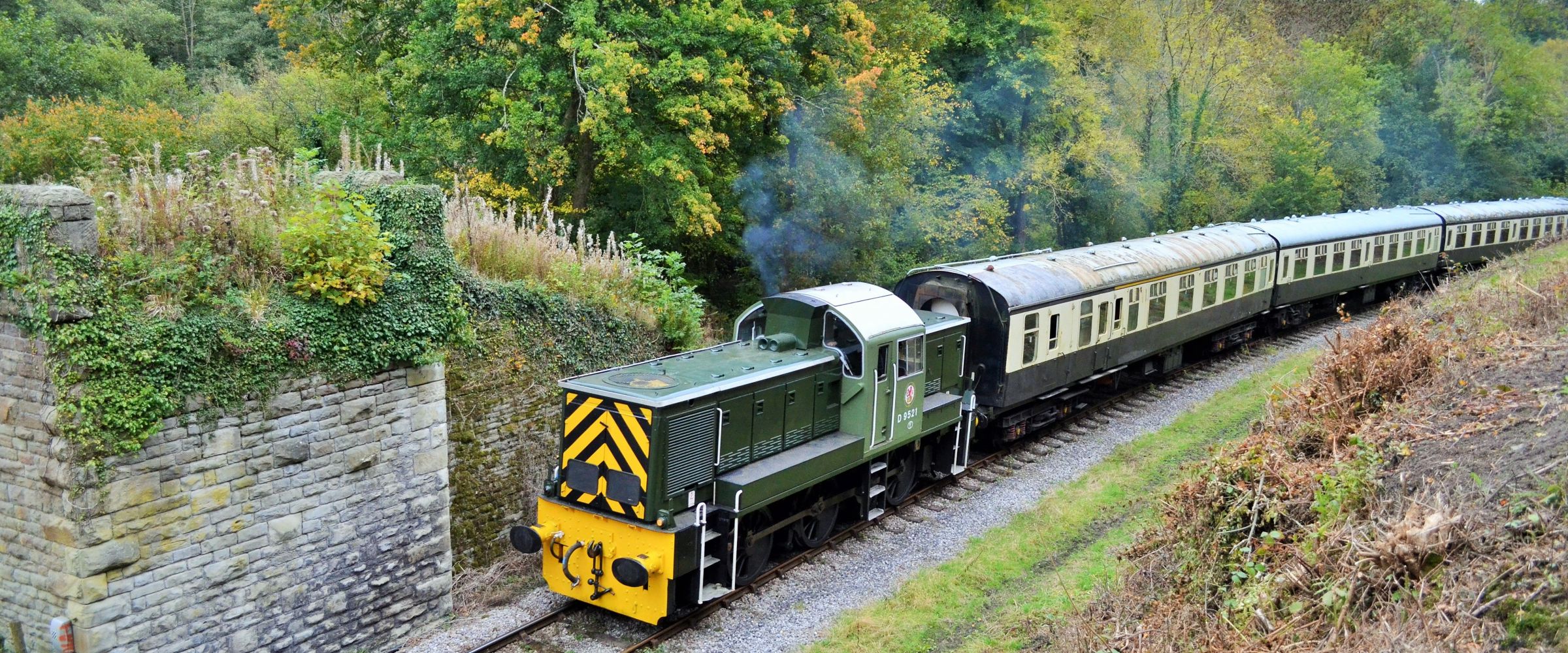
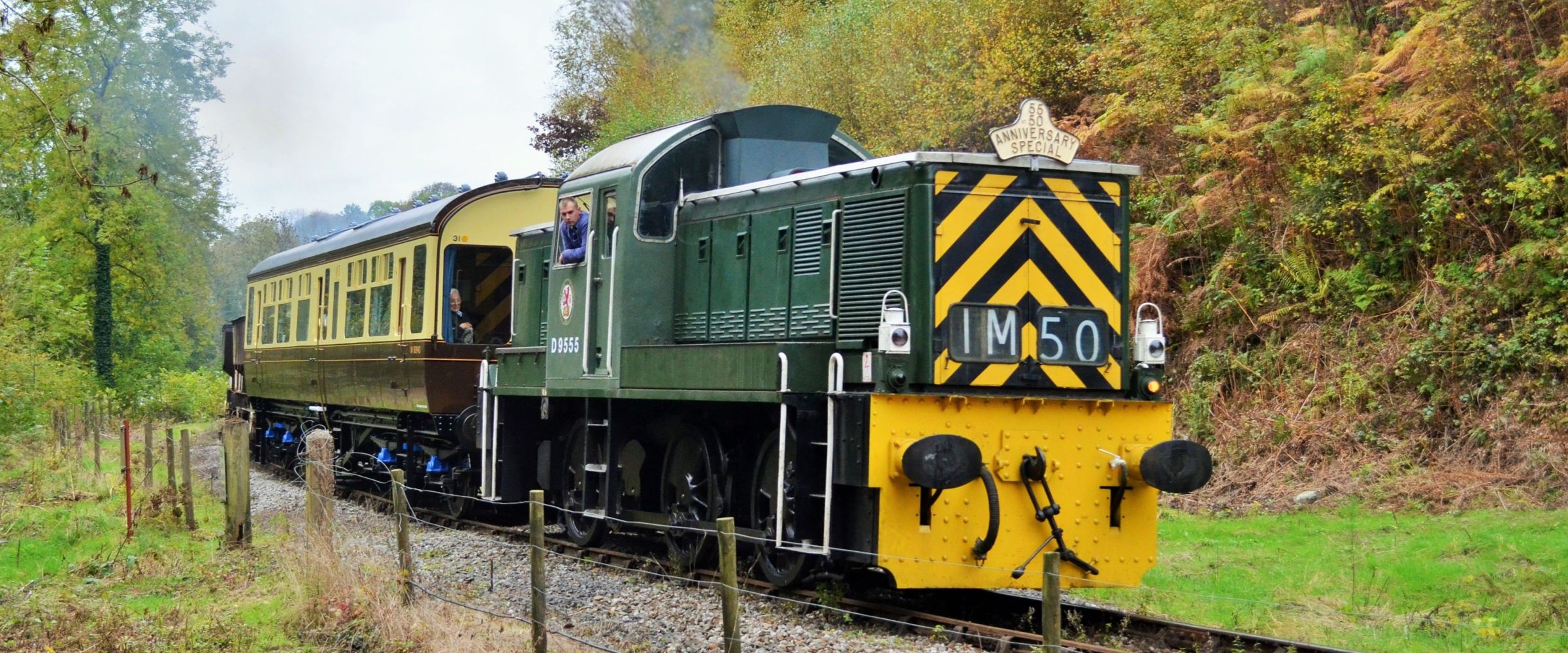
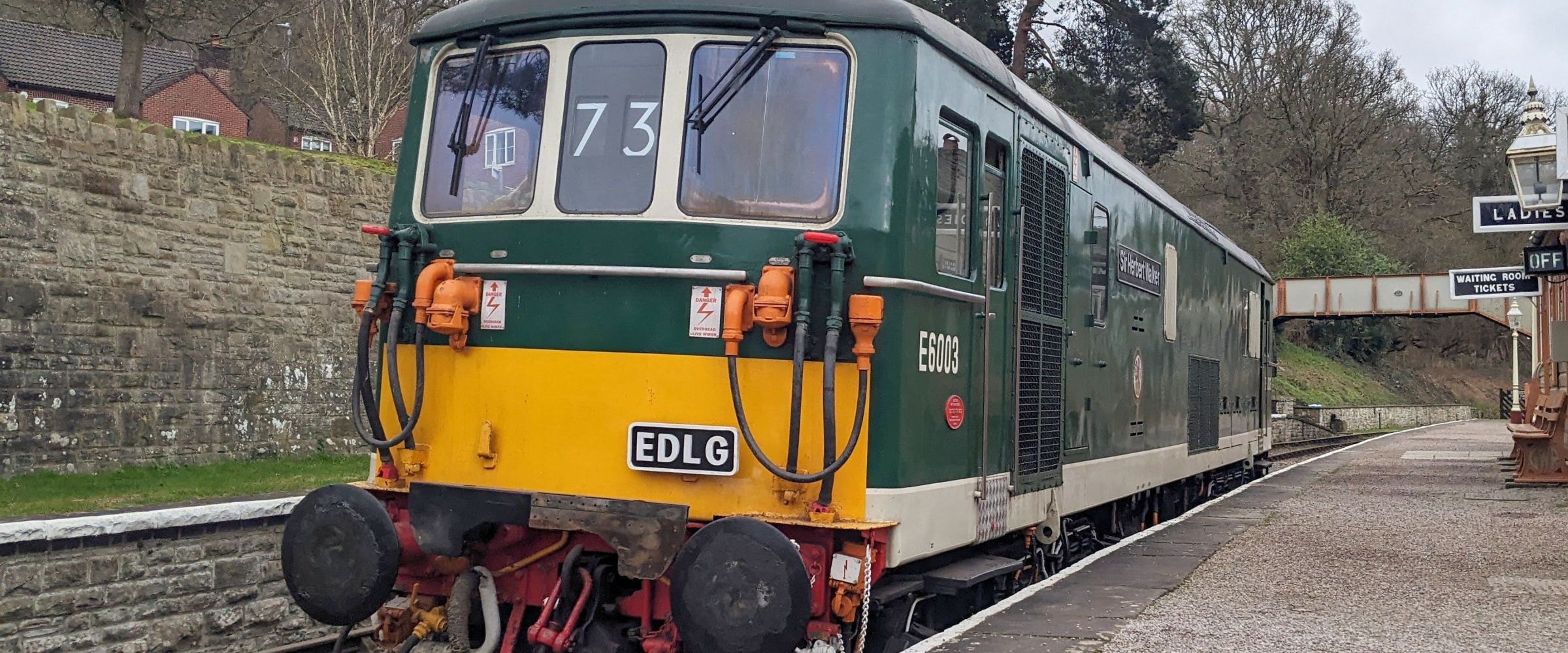
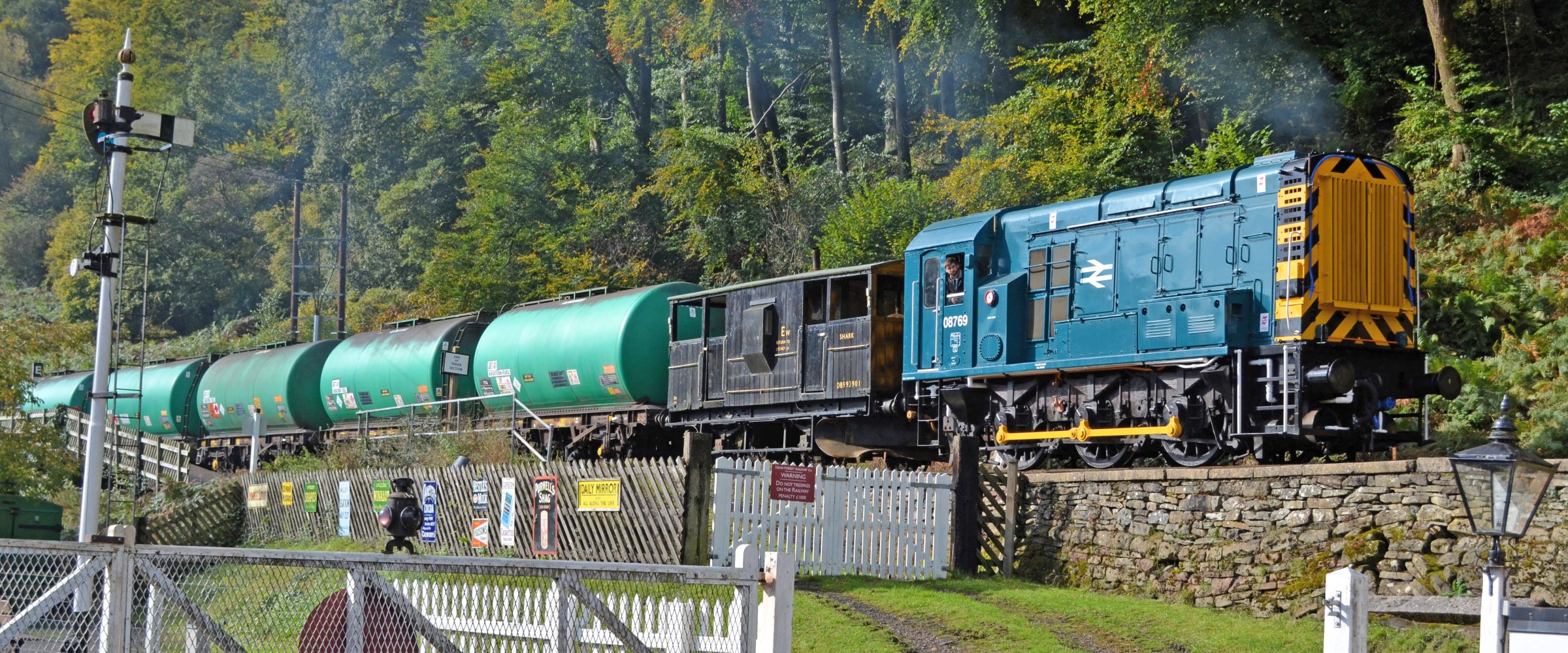
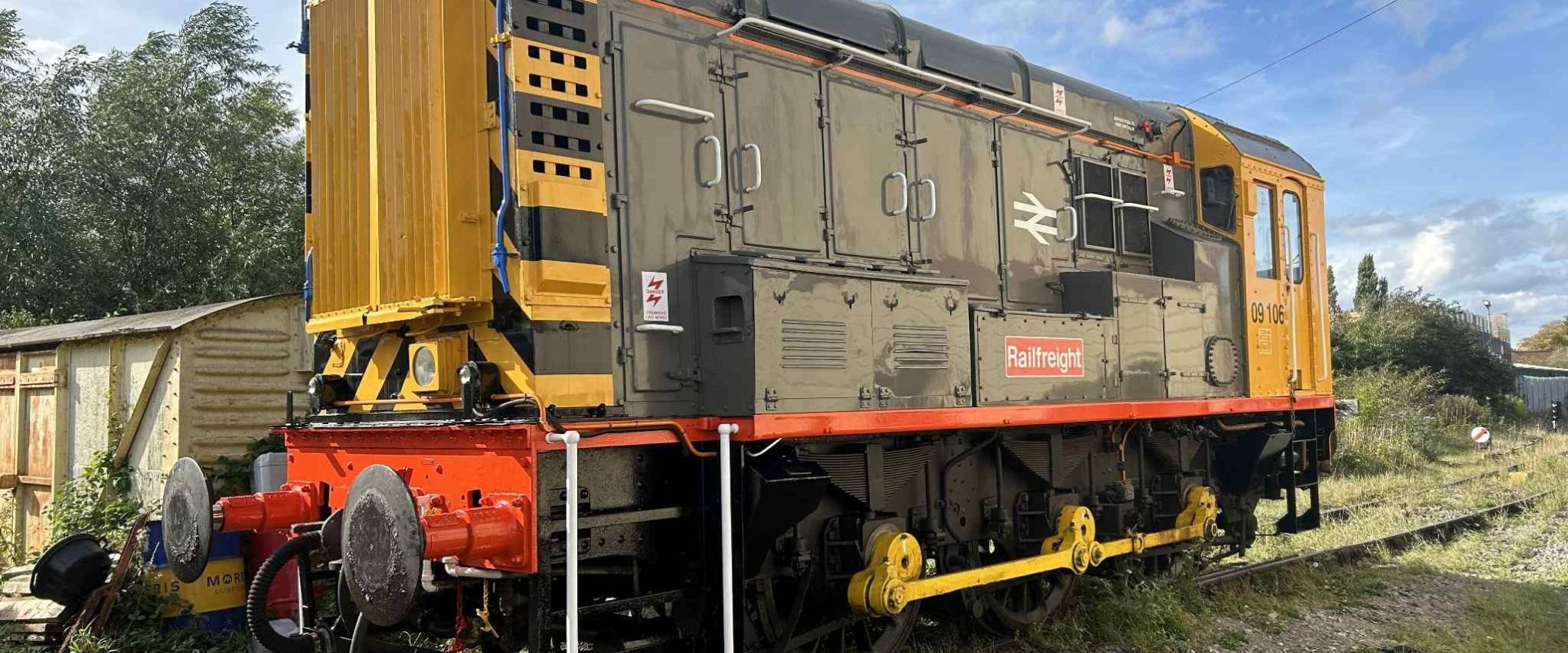
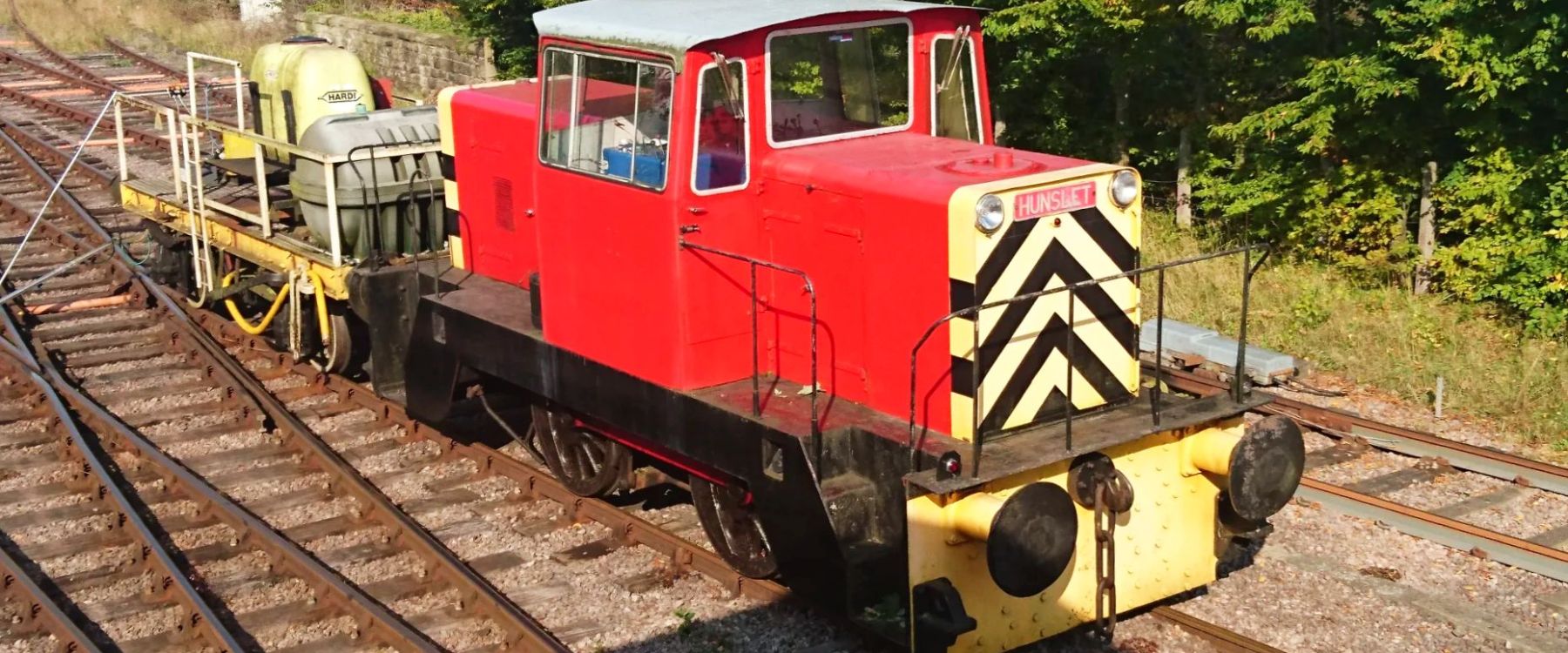

NB: other steam and diesel locomotives operate on the Dean Forest Railway from time to time, under a loan from private owners or organizations such as the Dean Forest Diesel Association.
Carriages
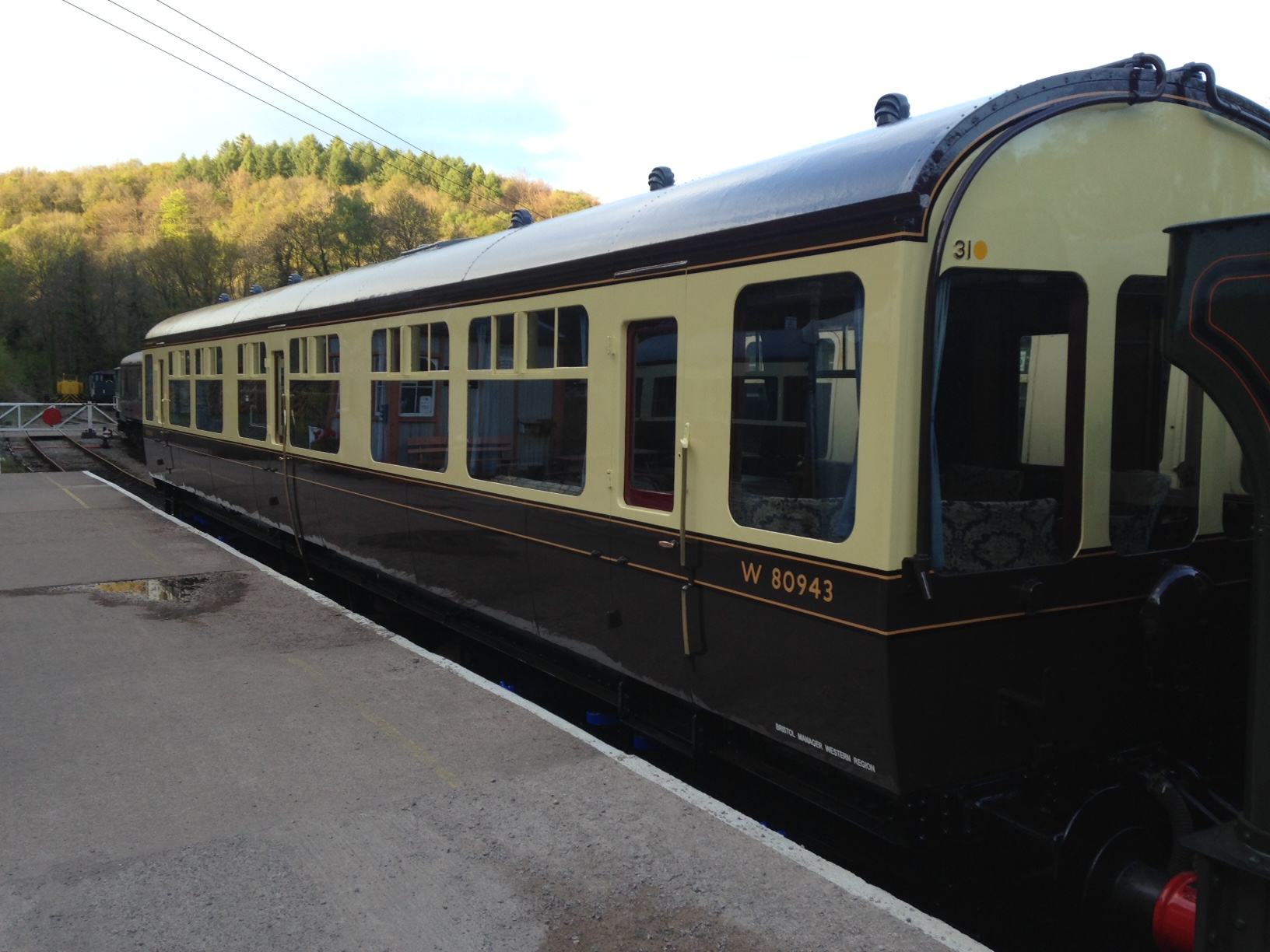 This is our inspection saloon designed for GWR by Hawksworth and built-in 1948, so strictly speaking a post-nationalization BR carriage. Seven were built and kept at specific locations for inspecting their local areas of the track.
The Dean Forest Railway recreates a branch line railway as it was under the Great Western Railway and the Western Region of British Railways. The GWR livery of chocolate and cream was continued by the WR after the nationalisation of 1948. However, in the confusion of post-war Britain, it wasn’t uncommon for companies’ fleets to have wandered off their usual patch and there had always been long-distance trains which crossed boundaries, both regular services and the summer excursion trains from the industrial areas of the North and Midlands to coastal resorts.
The great majority of pre-nationalisation carriages, with primarily wooden bodies, had to be replaced, thanks to their age, crash-worthiness and fire-risk. Thus in 1951 BR started building standard steel-bodied coaches: the Mk1. At the Dean Forest Railway, we operate a rake of Mk1 corridor coaches in the GWR livery.
At their introduction, long-distance corridor stock was liveried ‘blood and custard’ (crimson lake and cream) and from 1956 regions were allowed individual colours. The Western Region Mk1s reverted to GWR chocolate and cream for their principal express services, the Southern’s to malachite green and the rest (London Midland, Eastern, Scottish) went to overall maroon – along with the WR’s remainder. For some years, whilst old liveries remained alongside new, trains could be rather kaleidoscopic. Corridor coaches were either built as open saloons or as compartments with side-corridor, but in all cases, the doors were situated at end and centre vestibules. This is the interior of a second class Mk1 corridor coach: four seats facing four. A first-class coach had three seats per bench, separated by armrests.
The 1960s’ BR corporate identity plan introduced blue and grey as a universal colour scheme for corridor coaches. Mk1s disappeared from the mainline in the 1990s, having gradually been replaced by Mk2s from 1964 onwards.
Mk1 carriages with mixed liveries (left) and comprising two trains (right)
Stations
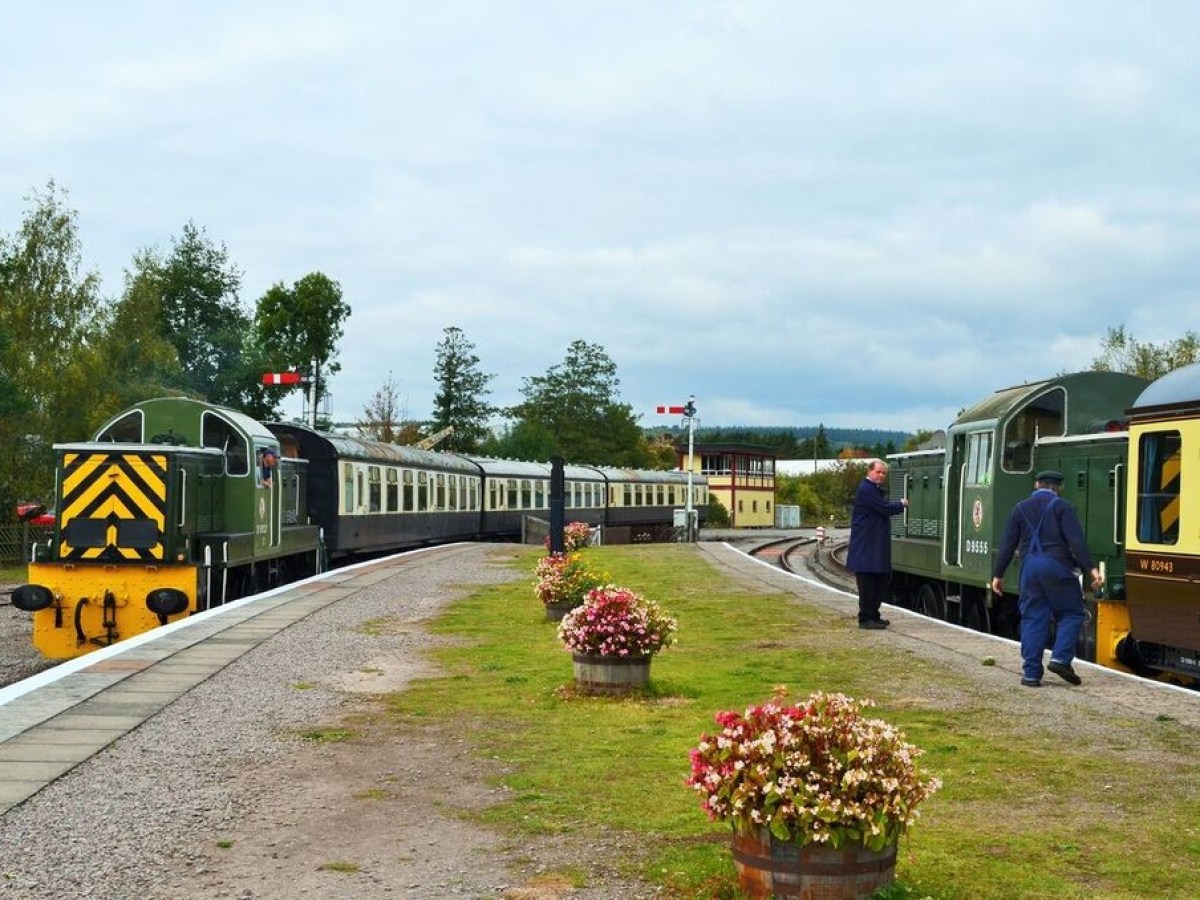
Norchard looking northwards towards Whitecroft and Parkend. Three Class 14 locos are pulling a train of Mk1 carriages into the high level platform.
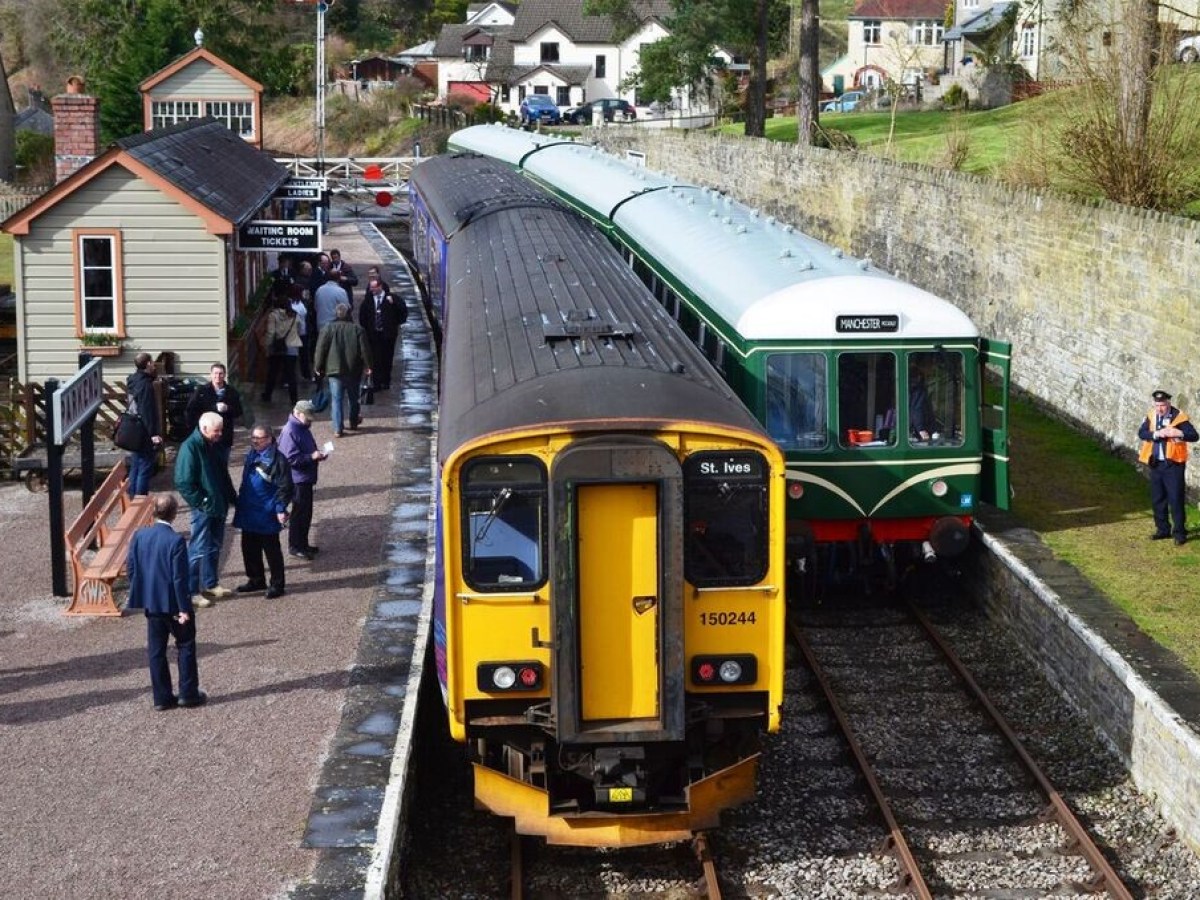
Parkend Station – currently the northern terminus of the line, with a modern visitor direct from Gloucester via the mainline for the 2015 DMU festival on the left.
Lydney Junction – the southern end of the line, close to the main line Lydney station and a short distance from Lydney Harbour.
Whitecroft Station – located between Norchard and Parkend Stations.

Landscape and Lineside Features (more to follow)
Inside the Norchard signal box

We are in the forest, after all...